Showing posts with label England. Show all posts

Friday, May 5, 2023

Coronation Days

My mother-in-law penned the tale of how her "pen pal," later to be her husband Alfred, finally managed to come to England in the summer of 1953. His visit happily coincided with the coronation. As she tells it:

He arrived just before the coronation of Queen Elizabeth II and I wanted to look at it on the TV. My mother said, "you cannot do that, Thelma, you ought to go to London with him!" So on the evening of the day before the coronation took place, we travelled with my cousin Terry to Regent Street in London. We sat on the pavement on a blanket in about the third row back from the kerb at 11:00 pm at night.  At 7:00 am the next morning, police on horseback came round and we were told we must all stand up. 

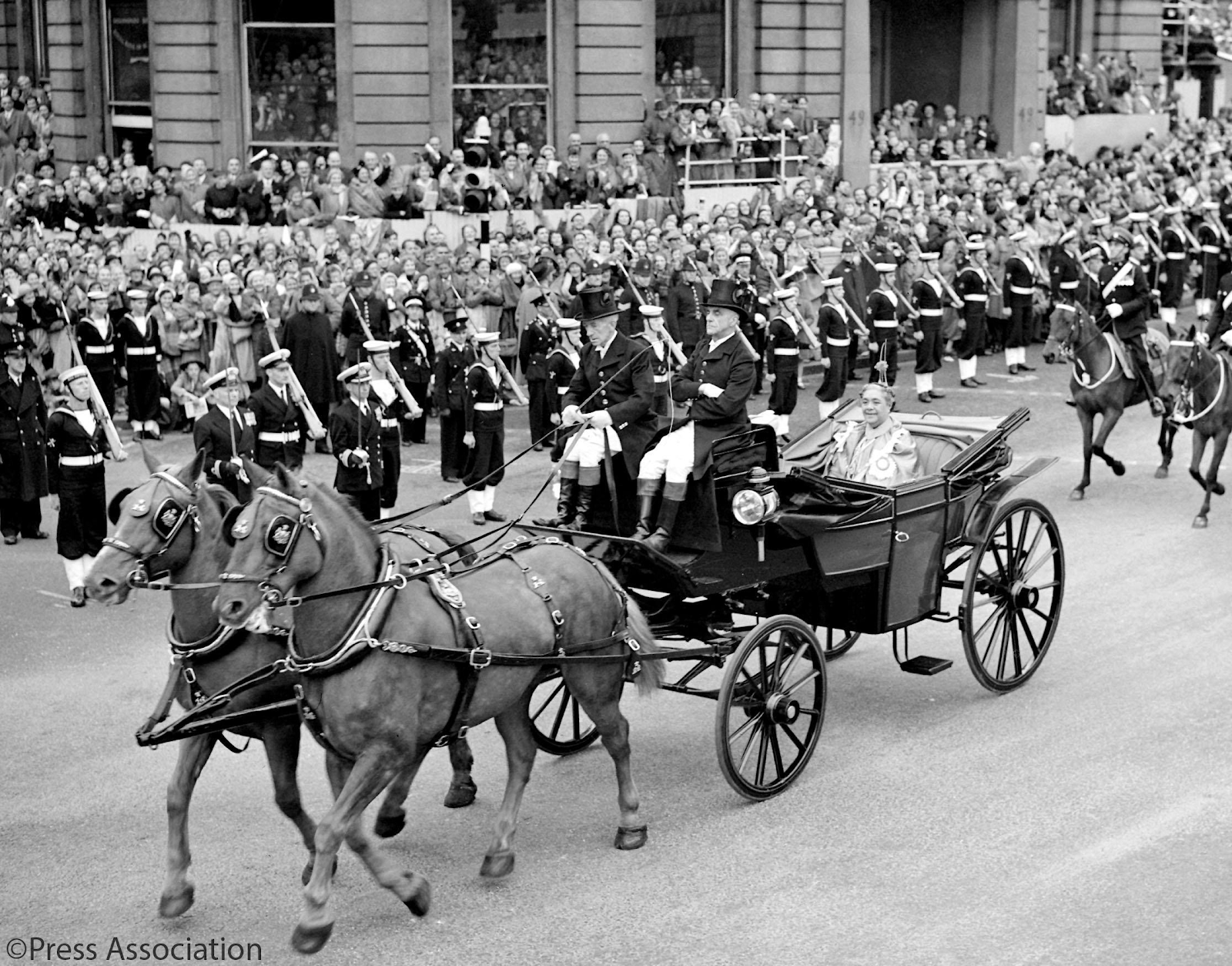
It wasn’t until 5 pm in the afternoon that the Queen and Philipp went past us in the Golden coach. It was raining slightly and the coaches with Kings and Queens from other countries had them closed up so that we only saw them through the windows. In the procession, only one Queen didn’t mind the rain: the Queen of Tonga, a smiling stout lady, was in her open coach. 

When the procession had passed by, we returned back to Walthamstow and I said, "I would not have missed it for the world, it was quite a sensation."

Queen Salote of Tonga famously delighted the crowds
in the coronation procession for Elizabeth II

Monday, April 17, 2023

Watson Genealogy & Chart

The Watson Family to the Richardson Family 

William1 Watson
ca 1680 - ?
|
John2 Watson
1747 – 1841
|
John3 Watson
ca 1772 – ca 1837
|
John Watson4 + Sarah "Sally" Poole
1799 – 1880      1802 – 1854
|
John Watson5 + Fanny Pettinger
1820 – 1896           1822 – 1865
|
Kate Clementine6 + David Fay Richardson
1860 – 1942                       1854 – 1943
|
Ella 
Florence
Ruth
Fay
Russell

WILLIAM1 WATSON was born ca. 1680; buried at South Clifton, Nottinghamshire, churchyard. He was supposedly been stolen or kidnapped when a child. He married 1715. They had one son: John; b. 1747.

Map of Clifton, Lincolnshire and environs

JOHN2 WATSON was born in 1747 in South Clifton, Nottinghamshire, England; he died 1841 (age 94) and was buried in the So. Clifton churchyard. His children:

  • John, b. 1772
  • George was born in So. Clifton; His son John was living in 1898 in South Clifton; no issue. “Has played the pipe organ in South Clifton Church 25 years.”
  • Henry, birth unknown; His son William was born 1830 in So. Clifton. He had 9 children (all living in So. Clifton 1898): John, Henry, Annie, George, Florence, Sallie, Minnie, Fred, and Mary). His daughter, Mathilda was born in 1832.

JOHN3 WATSON II was born ca. 1772 in South Clifton, Nottinghamshire, England. He died ca. 1837, and was buried in Kettlethorpe, Lincolnshire, England. He had eight children:

  • John, b. 23 April 1799; d. 12 Feb. 1880
  • Thomas
  • William, had 7 children in the US
  • Edward, had 3 sons, remained in Lincolnshire
  • Richard
  • Sarah
  • Ann
  • Catherine

JOHN4 WATSON III was born 23 Apr 1799 in Marton, Lincolnshire, England. He died 12 Feb 1880 Red Wing, Minnesota. He married (1) SARAH "SALLY" POOLE on 9 Jun 1819, and they went to live in Market Rasen. Sally was born 10 Jul 1802 in Marton; She died 7 Jan 1854 in Sarnia, Ontario, Canada. He married (2) CHRISTINA MCDOUGALE CROSS on 01 Nov 1855 in Sarnia, Ontario, Canada. She died on 21 Apr 1859.

John Watson III (1799 - 1880)

"This picture was taken on his return to England [1876] to look after a very large estate that had been left by Lord Watson, supposed to be his uncle but was struck with paralasis [sic] before completing the business and had to return to America." -recollections of his granddaughter 

He came to Canada in 1849. He had a boat named after Christina Cross; one account says “boat launched Sunday at Sarnia went down and he lost his life,” which was not the case. He came to Red Wing, Minnesota on 13 Feb 1861, where he died 12 Feb 1880.

Children by Sally Poole: 

  • John, b. 20 Apr 1820, Market Rasen
  • Elijah, b. 24 Mar 1822, Rasen
  • Charles Poole, b. 29 May 1824, Marton
  • Sarah, b. 21 Sep 1826, Marton
  • William Lewis, b. 1 Oct 1828, Marton
  • Ebenezer Poole, b. 18 Jan 1831. Marton
  • Eunice Elizabeth, b. 16 Feb 1833, Marton
  • Phoebe, b. 30 Jul 1835, Marton
  • Mary, b. 3 Sep 1837, Marton
  • Jabez Poole, b. 26 Sep 1839, Marton
  • Catherine, b. 18 Aug 1841, Dunham, Quebec
  • Annie Rachel, b. 6 or 16 Feb 1844, Dunham

Chn by Christina Mcdougale Cross:

  • Emma Christiana, b. 9 Aug 1857, Sarnia, Ontario; d. Sep 185x
  • a daughter, born 26 Dec. 1858, lived 2 hours

JOHN5 WATSON IV was born 20 Apr 1820 in Market Rasen, Lincolnshire, England (1 a.m.); He died 30 Apr 1896 in River Falls, Pierce County, Wisconsin.
 
He married (1) FANNY PETTINGER, daughter of George Pettinger, a Lincolnshire lawyer, and Sarah Broadbent on 8 Apr 1841 in Gainsborough, Lincolnshire, England. She was born 27 Sep 1822 in England; She died on 07 Jul 1866 in Featherstone, Minnesota.

Rev. John Watson (1820 - 1896)
 
Fanny (Pettinger) Watson (1822 - 1865)
 
He emigrated to Dunham, Canada in 1841. In October 1855 he came to Red Wing, Minnesota, having seven children at that time; He took up a claim at Featherstone near Red Wing, 1858, and lived there until about 1871, when he moved to River Falls, Wisconsin, where he died 30 April 1896.
 
He married (2) SARAH ANN STOKES on 8 Oct 1867 in Warwick Township, Ontario, Canada. She was born in July 1841 in Sarnia, Lambton, Ontario, Canada. She died in Feb 1905 in River Falls, Wisconsin.
 
Children by Fanny Pettinger:
  • Elijah Pettinger, b. 19 Nov 1841, Dunham, Quebec
  • Charles Herbert, b. 20 Oct 1843 Granby, Quebec
  • Merton Poole, b. 4 July 1845; d. 1862
  • Clara Jane, b. 26 Nov 1847
  • David Wellington, b. 17 Nov 1849
  • Amy, b. 27 May 1852
  • Phoebe, b. 23 May 1854
  • Fred John, b. 12 Aug 1856
  • Froom Talford, b. 11 Mar 1858/59
  • Kate Clementine, b. 5 Oct 1860
  • Fanny Ella, b. 8 Jan 1862

Children by Sarah Ann Stokes:

  • Lily Magdalene, b. 1868; m. Charles Gunthorpe; d. 12 Aug 1926
  • Elmira Powell, b. 1870; m. Walter Chapman
  • Frank, b. 1879; m. Charlotte Smith
  • Anna, b. 1881; m. Philip Glass
  • Sara, b. 1883; m. (1) McIntyre, (2) J.H. Chatterson

KATHERINE CLEMENTINE6 WATSON was born on 5 Oct 1860 in Red Wing, Minnesota. She died on 8 Oct 1942 in Roseburg, Oregon. She married David Fay Richardson, son of George Warren Richardson and Caroline Amelia Fay, on 28 Aug 1883 in Goodhue County, Minnesota. He was born on 1 Jul 1854 in Galena, Illinois. He died on 9 Oct 1943 in Roseburg, Oregon, USA. They had five children:
  • Ella Lucile, b. 18 Aug 1884; m. Bernard Street 3 Aug 1907; d. 3 Mar 1936
  • Florence Clementine, b. 23 Aug 1885; m. Claude Winship Street 3 Aug 1907; d. 11 July 1963
  • Ruth Catherine, b. 6 Jun 1892; m. Arthur Gerald Smith 29 Apr 1916; d. 6 Oct 1964
  • Fay Watson, b. 10 Dec 1893; m. Florence Grinsted 9 Sep 1916; d. 19 Jun 1951
  • Russell David, b. 20 Apr 1895; m. (1)Jessie Dewey Cutting 10 Apr 1920; m. (2) Elizabeth Barker 16 Nov 1984; d. 6 Dec 1986
===

The full Watson Family chart

 Back to Table of Contents

Friday, November 25, 2022

Australian royalty

If you haven't already, you'll want to read the story of the Launceston Library.  

Picking up where I left off: I had three siblings with land grants in Launceston, Tasmania (then called Van Dieman's Land). All of them were free persons--no convicts. My great aunt Marjorie had been adamant that there were no convicts to sully our name or reputation. But I couldn't help but wonder why an entire family that had been in the same village for generations would uproot to an unknown and distant land--reachable only by a two to five-month sea voyage that was in itself an ordeal.

I learned that the English government was offering a bounty to young men with a trade, which William "George" Beck was. He was  a carpenter, and I can remember seeing the chest he made in my great aunt's house. But that didn't explain why his parents and four of his aunts and uncles made the same trip. 

Having established that we had three siblings and their spouses thanks to my distant cousin just across the Canadian border, I learned from this same gentlemen that their father, Samuel Knight, had been the subject of a trial at the old Bailey on April 25, 1814. 

The transcript from the Old Bailey trial

Samuel, a cloth salesman, had moved his family to London in hopes to improve their economic situation, but that apparently had not worked out, and on an April evening, he and his brother and a couple of cronies took a crow bar to a warehouse door and stole  some furs. Both Samuel and his brother James were sentenced to death. Both of them had their sentences commuted to transportation.

On August 7, 1815, James and Samuel were transported to Port Jackson, Sydney in Australia aboard the Baring, along with 300 other convicts. In 1830, Samuel completed his sentence, and his son John, who had moved to Launceston, applied for a land grant for his father and brothers-in-law. In 1822, two things happened: James died, and Samuel earned a ticket of leave. Samuel then requested a transfer to Van Dieman's Land. By 1829, he had a conditional pardon, though his commuted sentence meant that he could never return to England. 

So it appears that Samuel, a convict, is most certainly the reason that the three siblings came to Launceston: the timing permitted petitions for Samuel's transfer and land grants for the siblings, all taken care of by his son John. 

In an interesting footnote, George Beck's first Daughter, Sarah, was left behind with his parents and aunties when he left for California. She ended up marrying an Irish man who had also received a death sentence--for stealing a gentleman's handkerchief--commuted to transportation: during his sea journey to Launceston, the transportation system was dismantled, and he found himself a free man upon arrival (except for the option of returning to Dublin). Thomas Hughes was a watchmaker, and provided well for his wife and 12 children. There are still many Hughes in Tasmania who can trace their roots to this couple.


Saturday, June 11, 2022

Smith, anything but common

My mother-in-law (you can read her sweet love story here) has always said she never cared for her surname, Smith, as it was so very common. But I find her grandfather, Joe Smith, anything but common. 

Joseph Edward Smith was born on 31 March 1873 in Whitechapel, and was baptized 24 August 1873. He married Emily Maud Foster in Hackney on 3 August 1896. His occupation at the time was cheesemonger’s assistant. Five years later, in the 1901 census, Joseph is a baker’s assistant and he and Emily are living at 7 London Road, Hackney. Like many, Joe appears to have fudged his age when he enlisted in WWI on 12 December 1915.  

Joseph was devoted to Emily and they celebrated their 50th Wedding Anniversary in 1946. They had four children, three of whom died without issue. His activities in the trade union movement brought him in contact with the family of William Adams: William's daughter ended up marrying Joseph's youngest son: Thelma and her sister Kathleen are the result, the only grandchildren to Joe and Emily.  

Kathleen passed on some reminiscences of their grandfather:

Joseph was a small man, even as a child he looked short to me. The most he would have been was 5 ft , 7 inches tall. I remember he was someone who liked to be outside in the company of other men. He used to go the park and play bowls and he liked to go to cafés for a cup of tea, and I think he met up with his friends there. He smoked a pipe but Emily would not let him smoke in the house. I remember him going into the garden to smoke. He was a nice man with a quiet temperate nature.

Children perceive their family members one way, while adults see things through a different lens. Joe died in 1953, and his legacy earned him several column inches:

[Feb 1953]

TRADES UNION PIONEER DIES

Within 24 hours of being admitted to Langthorne Hospital, Leytonstone, following a short illness, Mr. Joseph Edward Smith, of 18, Coronation-gardens, Leyton, died last Thursday. He was 79 years of age.

Born at Whitechapel, Mr. Smith had lived in Leyton over 40 years. A member of the Leyton and District Committee of the Tobacco Workers Union, he was employed as a tobacco stripper until his retirement in 1938.

A keen trade unionist, Mr. Smith served on Walthamstow Trades Council early in 1900, and during the 1914–18 war contested Leytonstone Ward – then a conservative stronghold – in  the Layton Borough Council elections. In 1893, he was a member of the Socialist Democratic Federation, a forerunner of the Labour Party, and was a founder member of the Shop Assistants’ Union which is now incorporated with N.U.D.A.W.

During 1920, Mr. Smith was actively associated with the Layton and Leytonstone Poor Children’s Outing Fund, a body which had the patronage of a local mayor. 

He served with the Royal Scots in the First World War. 

A widower since March, 1950, He is survived by two sons and a daughter. 

The funeral was at Queens-road Cemetery, Walthamstow, on Tuesday, the service being conducted by the Rev. R.W. Sorenson, M.P. for Layton.

Joseph Edward Smith


Monday, February 21, 2022

Potatoes and pen pals

In 1951 in postwar London, a young woman was working as a bookkeeper and decided to take a holiday in the fresh air. She and a girlfriend from the office chose to go to a student’s camp in Warehorne, Kent in September, 1951. They travelled by train from Victoria and were picked up by a lorry which took them to the camp. They arrived there on a Saturday morning, and were told that there were a group of German students already there. Indeed, these were the first Germans she had ever seen in real life.

On Monday morning, their group were taken to a farm to help a farmer harvest potatoes. On the field were big weighing machines which had a sack fixed to it. They had to fill the sack to one hundred weight, (CWT), and tie the top up and pull it away, and then put another sack on the hooks. They had two metal baskets to fill and it was hard work. Our young woman, Thelma, took Tuesday and Wednesday off because she had twisted her ankle, but was back at work on Thursday. Everyone--English, German, French, and African--got on well together and had a healthy holiday. 

On the Friday evening before the girls left to go home there was a dance and she danced with a blond, blue eyed young man who she had seen now and again to speak to during the week. He spoke very good English. The next morning the girls were packed and ready to leave, but Thelma wanted to take a photo with her Brown Box Camera of the girls they had met. Just as she took the picture, the blond man came and stood behind them--what we would call a photo bomb today. She then asked him whether he would like a copy of the photo and he said yes please and gave her his name (Alfred) and his home address. 

She had the photos printed and sent them to him. He was so pleased to get a photo which he liked of himself. At that time Alfred was 25 and our young woman, Thelma, was 17. It was nearing Christmas, and she sent Alfred a book of John Milton poems. He sent a parcel as well: his mother had baked German Christmas cookies. When she opened the parcel there were only crumbs but they were delicious. They wrote to one another now and again--both were busy, he at university and she was working long hours, making her own clothes and taking some evening classes.  

But they kept writing to each other. Their friendship deepened, and they managed the odd visit: he came to England and they camped out overnight and waited for the Queen's coronation procession. They continued to write, and their letters took a personal turn. Alfred's family invited her to visit their little village. It was her first trip abroad.

She went to Victoria station by bus, then by train to Dover and boarded a boat from there to Ostend. From there, she took the train to Stuttgart, and her Alfred came to pick her up. She was welcomed in Betra by his mother, father and sister and spent two weeks with them. Alfred took her to go see Lake Constance. They had a lovely day and returned back again in the evening. There were no lights on the walk up the hill back to his home and it was raining, but Alfred had an umbrella with him. However, his father did not know they had an umbrella and thought he would come and bring one. Alfred took the chance to steal a first kiss. Just at that moment Alfred’s father shone a flashlight on them! 

The visit went all too quickly and Thelma had to go home again. By now they realized that they wanted to stay together. It took several years of study and work, many letters, and a few visits, but in the summer of 1958, Alfred came to England, this time to marry Thelma and take her home to Germany. 

Yes, she baked the cake and made the dress herself!
A modest piece of land

 My husband's Auntie Kath started writing up the family history before she was incapacitated by a stroke; these were working people, living through the depression and WWII. But they managed to put money aside and buy a piece of land not too far away from their London council house. Kathleen and her sister Thelma speak of the place with obvious affection:

Before WW2 my father became a carpenter and bought the fencing that was being replaced by iron railings round Queens Road Cemetery in Walthamstow.  A quarter acre of land had been purchased In Doddinghurst in Essex. I can’t imagine it would have cost much to buy in those days as they didn’t have much money. With the fencing he built a two-roomed bungalow that the family used to go to at weekends and holidays. 

It was called Thelmadene and after the war this was a place in the countryside that I came to love. It was a very carefree place, among farms, with just two shops at different ends of the road. They were both “General Stores” and one included a cafĂ©. The one we used most was closest to the bus stop at the green. The store smelt of bacon and paraffin and you could buy just about everything there. The bus close by would run a few times a day to the bigger town of Brentwood. I am told that before I was born my father used to bicycle there with my sister in a sidecar.  

I remember it as a place of freedom where you could be out all day adventuring and someone would come looking for you at tea time. But this was later after the war. I remember my mother telling me that they used to go there during the war when I was a baby until the time the army located an anti-aircraft gun on the front of our piece of land and kept firing away all night and no one could get any sleep. 

The bungalow consisted of one living room and one bedroom. There always seemed to me room enough for everyone to sleep no matter how many people stayed. I remember the old iron bedstead that I used to sleep in with Thelma or any other children who stayed. It was all so warm and comfortable. One morning I awoke to a big cow poking its head through the open window sniffing my bedclothes. 

Whenever we would arrive and unlock the door, something would always scurry across the floor out of sight. Rabbits burrowed under the house so sometimes mum would lay a snare at night and we would have rabbit casserole the next day. My mother cooked on a coal range or sometimes outside in a fire built in a hole dug in the ground. We had paraffin lamps for light and in the evening we used to play a lot of card games. We had a fancy carved old chaise longue which would be worth a fortune today, and a huge mirror with a twisted carved oak frame that covered the dividing wall between the two rooms, and came from a tailors. I wonder how they got that there?

Mother, daughter and cousins having tea with a half-built Thelmadene in the background